

Which Electric SUV Suits You?
As electric vehicles take over the modern road, the Ford Mustang Mach-E vs. Tesla Model Y debate continues to energize drivers seeking a stylish, high-tech, and high-performance SUV. These two EV titans bring different strengths to the table, but one stands out as the bold, driver-focused choice for real-world adventurers. From capability to comfort and charge time to self-driving capabilities, this Ford Mustang Mach-E vs. Tesla Model Y comparison highlights what matters most for EV buyers looking to make a smart switch, as well as car shoppers considering their options for the best overall value and features in a car. Read on with Crossroads Ford of Kernersville and discover which electric SUV deserves a place in your driveway.
A Statement in Motion
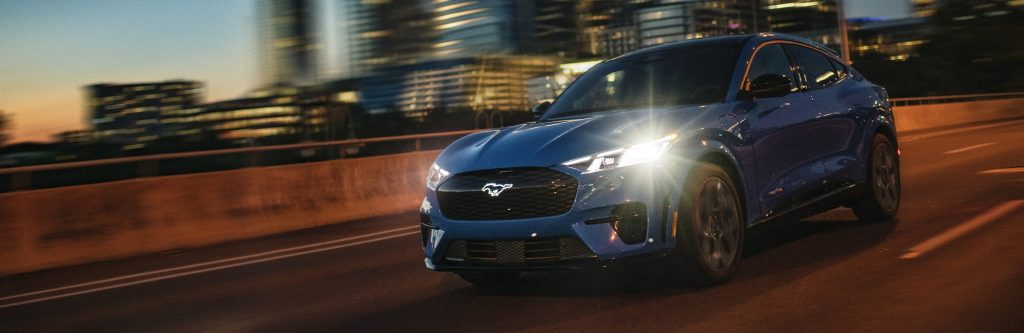
Design is the first impression, and in the Ford Mustang Mach-E vs. Tesla Model Y matchup, it’s a tale of iconic performance vs. futuristic functionality. The Ford Mustang Mach-E channels its Mustang roots with athletic lines, bold lighting elements, and a stance that says “let’s go.” Inside, a streamlined yet warm interior features soft-touch materials, available ambient lighting, and a tactile volume knob on its 15.5-inch display. The Ford Mustang Mach-E offers performance ActiveX™ upholstery, providing a premium feel, and the front seats are supportive and comfortable, with available heating for added luxury.
Meanwhile, the Tesla Model Y’s design is minimalistic and aerodynamic, inside and out. The dash features a clean layout dominated by a large central touchscreen, integrating most vehicle controls and information. While the cabin offers plenty of space, its lack of physical controls and stark dashboard layout isn’t for everyone. The Tesla Model Y comes standard with synthetic leather upholstery, and its front seats are heated and provide good support.
Both vehicles offer premium roof options: the Ford Mustang Mach-E is available with a panoramic sunroof, while the Tesla Model Y features a standard glass roof that enhances the sense of space and light in the cabin. For drivers who crave connection to the road and intuitive comfort, the Ford Mustang Mach-E offers a more engaging atmosphere from the start.
Built for Thrill-Seekers
The Ford Mustang Mach-E GT vs. Tesla Model Y Performance performance comparison brings real excitement. Both vehicles rely on powerful electric motors as the source of their impressive specs. The Ford Mustang Mach-E GT delivers up to 480 horsepower and 700 lb-ft of torque with the GT™ Performance Upgrade, allowing it to rocket from 0–60 MPH in just 3.3 seconds. Thanks to instant torque from its electric motors, acceleration is immediate and exhilarating. Its standard all-wheel drive (eAWD) system and MagneRide® damping system help it corner confidently and carve through curves with precision, minimizing body roll and providing a composed ride. The ride quality in the Ford Mustang Mach-E GT is sporty yet comfortable, absorbing road imperfections while maintaining sharp handling.
The Tesla Model Y Performance model also features dual electric motors and produces strong torque, offering quick acceleration—0–60 MPH in as little as 3.5 seconds—with instant torque for rapid response. It is available with all-wheel drive, which enhances traction and performance, while rear-wheel drive is offered on other Tesla Model Y variants for those prioritizing efficiency. In terms of handling, the Tesla Model Y Performance exhibits slightly more body roll than the Ford Mustang Mach-E GT, but still delivers a firm and engaging ride. Ride quality is firm, tuned for sporty driving, but some may find the Ford Mustang Mach-E GT more refined over rough surfaces.
Both vehicles offer performance upgrade options, such as the GT Performance Edition for the Ford Mustang Mach-E and Performance Upgrade for the Tesla Model Y, further enhancing acceleration and handling. For those seeking something unique, the Ford Mustang Mach-E Rally stands out as a special high-performance variant designed for adventurous driving. Additionally, long range models are available for both lineups, providing extended driving range for those who need more miles between charges.
Ford’s heritage in performance engineering shines in the Ford Mustang Mach-E GT, where power meets control and emotion meets innovation.
How Fast Can You Charge?
Charge time can make or break your EV experience, and when comparing Ford Mustang Mach-E charge time vs. Tesla, both offer competitive numbers, but with key differences. Tesla’s proprietary Tesla Supercharger network allows the Tesla Model Y to charge from 10% to 80% in about 25 minutes, providing a significant advantage in charging speed and convenience. The Ford Mustang Mach-E, using a DC fast charger, reaches the same level in approximately 33 minutes—but it’s backed by the BlueOval™ Charge Network, North America’s largest public charging network. That means more access, more flexibility, and more confidence on long trips.
When looking at efficiency, the Tesla Model Y and Ford Mustang Mach-E both offer strong battery efficiency, which impacts not only charging speed but also overall range and real-world usability. In terms of fuel economy, the Tesla Model Y achieves up to 125 MPGe combined, while the Ford Mustang Mach-E offers up to 103 MPGe combined, making efficiency a key factor in daily driving costs.
Looking at driving range, the Tesla Model Y Performance can travel up to an EPA-estimated 277 miles on a full charge, while the Ford Mustang Mach-E GT offers up to 280 miles, giving the Ford a few more miles per charge. Both vehicles offer various trims ranging in battery size and performance, with the Ford Mustang Mach-E providing an extended-range battery option up to 320 miles of range for those who need to maximize their driving range for longer trips. This variety in battery and range options means you can choose the configuration that best fits your needs.
Technology That Connects, Not Confuses
Technology should elevate your drive—not distract from it. In the Ford Mustang Mach-E vs. Tesla Model Y tech showdown, Ford’s SYNC® 4A system stands out for ease of use, intuitive voice controls, and compatibility with both Android Auto™ and Apple CarPlay®. Among its standard features, the Ford Mustang Mach-E offers a vertically mounted touchscreen, a customizable 10.2-inch digital cluster, and wireless device integration for seamless smartphone connectivity. Wireless device charging is standard, adding to the convenience features that enhance the overall driving experience.
Tesla’s interface is controlled almost entirely by its central screen, which controls everything from cabin temperature to wiper speed. This can feel futuristic to some and frustrating to others. For daily use, Ford’s blend of digital connectivity, tactile controls, and standard convenience features helps keep your attention where it belongs—on the road ahead.
Smarter Safety and Self-Driving Confidence
Advanced driver-assist features are a must, and both vehicles deliver—but the Ford Mustang Mach-E self driving vs. Tesla conversation reveals important differences. Tesla’s Autopilot and optional Full Self-Driving system rely on vision-only technology, and while advanced, it still requires attentive oversight.
The Ford Mustang Mach-E, on the other hand, offers BlueCruise, a hands-free highway driving system with eye tracking to ensure driver awareness. It operates on pre-qualified sections of divided highways and brings a sense of security without overpromising autonomy. The Ford Mustang Mach-E also includes a comprehensive suite of standard safety features such as Adaptive Cruise Control, automatic high beams, and rear cross-traffic alert, enhancing both convenience and safety. For added comfort, higher trims offer a heated steering wheel, making cold-weather driving more enjoyable. When it comes to balancing innovation with responsibility, Ford Mustang Mach-E self driving vs. Tesla swings in Ford’s favor for transparency and safety.
Versatility and Space Where You Need It
Whether you’re loading gear or packing for a weekend trip, space matters. The Tesla Model Y offers up to 76 cu.ft. of cargo space with the rear seats folded and optional third-row seating. Rear passengers in the Tesla Model Y benefit from superior legroom and foot space, enhancing comfort on longer journeys. The Ford Mustang Mach-E counters with a practical 59.7 cu.ft. of cargo room and a front trunk (frunk) that’s water-resistant and washable—perfect for muddy boots or chilled drinks. When it comes to seat comfort, the Tesla Model Y provides supportive front and rear seats with good ergonomics, while the Ford Mustang Mach-E’s seats are also well-cushioned but may feel firmer to some occupants. It’s a question of how you use your space, and for many, the Ford Mustang Mach-E’s thoughtful layout feels more tailored to everyday life.
The Right EV for the Right Life
In the end, the Ford Mustang Mach-E vs. Tesla Model Y comparison is about more than specs—it’s about lifestyle, variety, and value. The Ford Mustang Mach-E stands out with four trims, including the base model, Ford Mustang Mach-E Premium, and other enhanced model options, giving buyers a choice between base models for affordability and premium features for added luxury. The Mustang name brings a legacy of performance, now reimagined in an electric SUV with strong build quality and a range of models to suit different needs and budgets.
When comparing prices and overall price to value, the Ford Mustang Mach-E lineup offers competitive prices across its models, while Tesla’s Model Y is known for its advanced technology, charging network, and brand reputation. However, the Ford Mustang Mach-E Premium trim delivers premium features and build quality that rival Tesla’s offerings, making it a compelling choice for those seeking a balance of cost, amenities, and the iconic Mustang experience.
Test-drive the future today at Crossroads Ford of Kernersville and experience the thrill, comfort, and confidence of the Ford Mustang Mach-E—the electric SUV that was made with drivers in mind.

Ford Mustang Mach-E vs. Tesla Model 3: Which EV Will You Choose?
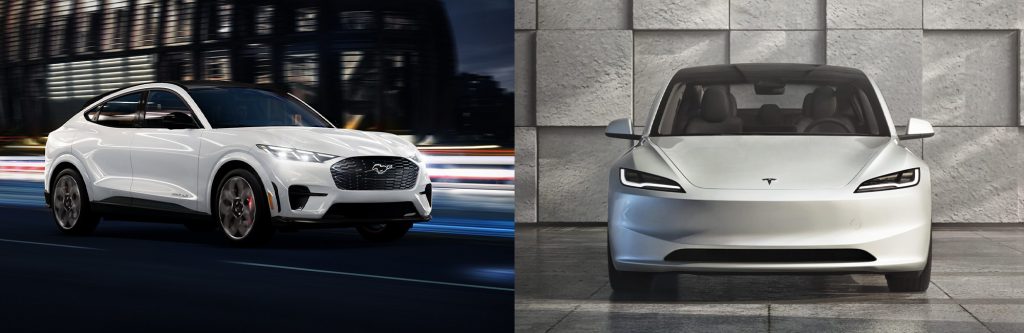
The electric vehicle market is growing, with the Ford Mustang Mach-E vs. Tesla Model 3 debate heating up as both are standout electric cars with unique features and capabilities. The comparison between these two vehicles highlights their unique strengths and features. You can expect high standards of luxury and build quality from these vehicles, with the Tesla Model 3 offering a minimalist interior and the Ford Mustang Mach-E providing a more performance-oriented aesthetic. Pricing is a crucial factor in this comparison, with the Ford Mustang Mach-E starting at a lower MSRP than the Tesla Model 3, making it a more affordable option for many buyers. With a much lower starting MSRP than Tesla, it offers a compelling entry point into the EV market without compromising on performance or features. Both vehicles offer advanced technology features that enhance the driving experience. Read our blog from Crossroads Ford of Kernersville to decide which one of these innovative EVs is for you!
Looking Good While You Feel Good
Design is a key differentiator in the Ford Mustang Mach-E vs. Tesla Model 3 matchup. The Ford delivers an athletic, aggressive look with Ford Mustang heritage cues and modern accents like LED lighting and sleek lines, complemented by a modern and elegant cabin. The Ford Mustang Mach-E’s cabin features soft-touch surfaces that enhance its premium feel. In contrast, the Tesla Model 3 leans into futuristic efficiency with its aerodynamic and minimalist exterior. For many, the Ford Mustang Mach-E’s sportier stance and dynamic styling, combined with its superior interior quality, better reflect the spirit of an engaging drive. Read on to uncover more Ford Mustang Mach-E vs. Tesla Model 3 specs.
More Power for Your Pep
In terms of sheer speed and acceleration, the Ford Mustang Mach-E GT vs. Tesla Model 3 Performance comparison is fierce, with the Ford leading with impressive acceleration times. The Ford Mustang Mach-E utilizes instant torque to enhance its performance and control in various driving modes. The Ford Mustang Mach-E leads with a 0–60 MPH time of as low as 3.3 seconds, while the Tesla Model 3 achieves this in as little as 4.2 seconds. The Ford Mustang Mach-E is also backed by an engaging eAWD system, giving it the agility and poise that drivers crave in real-world conditions. In contrast, the Tesla Model 3 possesses a dual-motor AWD, which is perfect for traveling long distances. The Ford Mustang Mach-E vs. Tesla Model 3 range comparison is quite close. The Ford Extended-Range rear-wheel drive model achieves up to an EPA-estimated 320 miles on a full charge, which isn’t too far from the Tesla Model 3’s 363 miles. Both vehicles offer impressive handling, with the Ford Mustang Mach-E providing precise steering feedback and a tuned suspension system. But this isn’t just about numbers, it’s about driving feel. While the Tesla can charge from 10% to 80% in as little as 25 minutes, the Ford Mustang Mach-E’s 43-minute time is complemented by access to the BlueOval™ Charge Network—the largest integrated public network in North America, offering more flexibility with over 100,000 locations.
Optimizing All Spaces Within
Inside, the Ford Mustang Mach-E vs. Tesla Model 3 debate gets interesting. Both models provide seating for up to five. The Tesla Model 3 has up to 17 speakers for immersive sound quality and a 15.4-in. touchscreen for all of your connectivity needs. By contrast, the Ford Mustang Mach-E balances comfort, design, and functionality seamlessly with its 15.5-in. screen, tactile volume knob, and a dedicated gauge cluster. The Ford Mustang Mach-E vs. Tesla Model 3 competition reveals distinct design philosophies. Tesla leans into minimalist control through its central screen, while Ford prioritizes driver usability with its SYNC® 4A system. The Ford Mustang Mach-E vs. Tesla Model 3 comparison also highlights Ford’s efficient use of space with up to 64.4 cu.ft. of cargo space, making it a more practical choice for those needing additional storage. The Tesla only utilizes 24 cu.ft., which may be enough for some, but for more versatility and passenger capacity, more space is favorable.
Safety First
When comparing the Ford Mustang Mach-E vs. Tesla Model 3 on safety, both excel, but have their fair share of similarities as well as their standout features. You can expect automatic emergency braking, lane-keeping assist, post-collision braking, and more from both models, and thanks to the Tesla Model 3’s lower center of gravity, you’d have enhanced rollover resistance and overall crash safety. The Ford Mustang Mach-E’s self-driving vs. Tesla Model 3’s autonomous driving ability is worth mentioning. However, it’s important to stay alert when utilizing BlueCruise or Autopilot, respectively. What makes the Ford Mustang Mach-E stand out is its commitment to reinforcing its position as a family-friendly, secure SUV that doesn’t compromise on passenger safety. The Ford Mustang Mach-E’s traction control settings enhance its driving dynamics, especially in low-grip situations. This also ties into the broader picture when considering Mustang Mach-E vs. Tesla Model 3 reliability, as Ford continues to focus on practical safety and dependability for everyday drivers.
Your Next EV
The Ford Mustang Mach-E vs. Tesla Model 3 comparison ultimately underscores a broader theme of value, usability, and thoughtful design for potential buyers, with each vehicle having its own advantages. The Ford Mustang Mach-E delivers on performance, comfort, and tech at a more accessible price point compared to other electric vehicles. In the context of Ford Mustang Mach-E vs. Tesla Model 3, it becomes even clearer that Ford’s model is purpose-built for modern drivers looking for an electric SUV that makes sense across the board. Take one for a test drive by visiting Crossroads Ford of Kernersville today!
Ford F-350 Work Truck: Tough, Reliable, Powerful
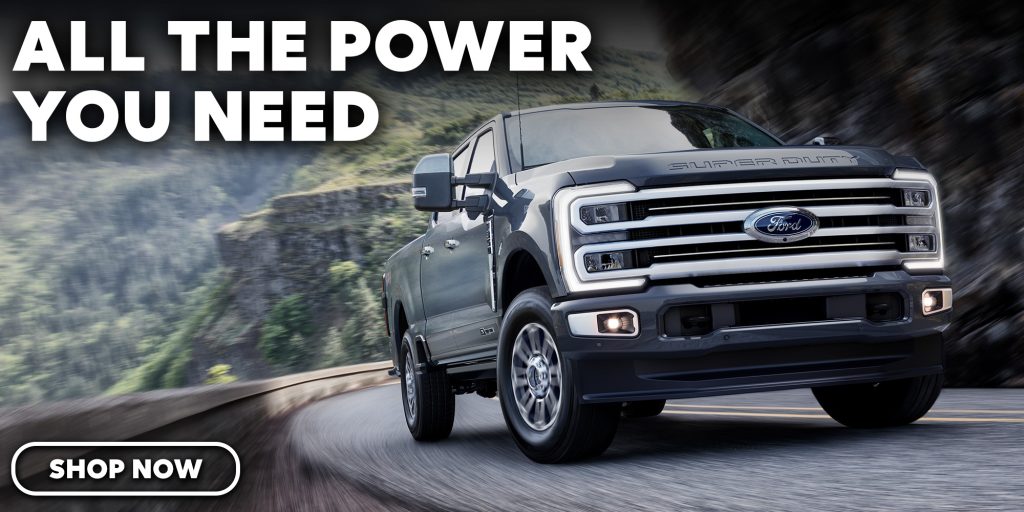
The Ford Truck For All Your Jobs
The 2025 Ford F-350 work truck is the latest powerhouse in Ford’s Super Duty lineup of trucks that were designed for performance and durability. You can explore the five trims to suit a wide range of needs, from the robust 2025 Ford F-350 XL and XLT to the deluxe 2025 Ford F-350 Platinum®. Whether you’re looking for an everyday workhorse, a versatile service truck, or a job site warrior, you can explore the numerous 2025 Ford F-350 accessories to find your perfect match. Take a trip to Crossroads Ford of Kernersville to find your Ford F-350 work truck today.
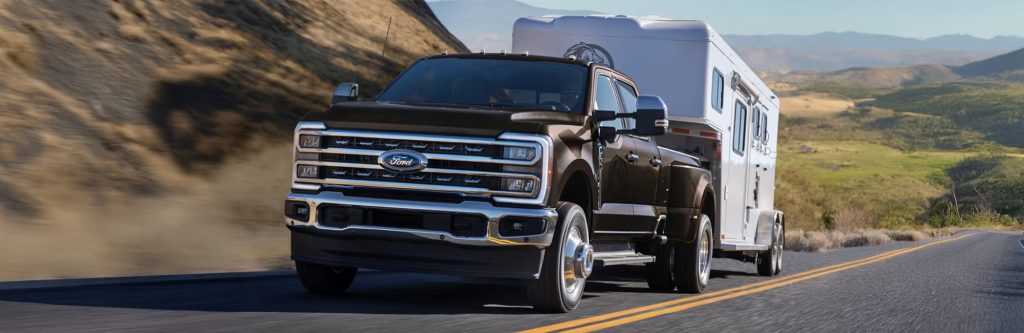
Power At Your Disposal
Designed for strength and functionality, the 2025 Ford F-350 fuel tank capacity fills up at a standard 34 or available 48 gallons, fueling every task with ease. Its bold, rugged frame is complemented by a variety of 2025 Ford F-350 wheel options, including the standard 17-in. and available 18-in., 20-in., and even 33-in. off-road tire options, which are available across different trims, ensuring that you can customize for your needs. Standard all-season tires or available all-terrain tires are engineered for durability and reliability, making them ideal for a variety of occasions, including off-road adventures.
LED lights and available 2kW Pro Power Onboard™ allow you to carry on your work wherever you are. Under the hood, the 2025 Ford F-350 work truck delivers impressive engine options that cater to different levels of performance. The standard engine is a 6.8L V8, providing an outstanding blend of 405 horsepower and 445 lb.-ft. of torque that can handle your heavy-duty tasks with ease. For those who need even more power, the optional 6.7L High Output Power Stroke® V8 delivers an impressive 500 horsepower and a jaw-dropping 1,200 lb.-ft. of torque. One of the differences between the 2025 Ford F-250 and Ford F-350 is their towing capabilities. With the 6.7L engine, you’ll be able to achieve the maximum 2025 Ford F-350 towing capacity of 38,000 lbs. when paired with the available Max Tow Package, compared to 23,000 lbs. with the Ford F-250. You also have options to optimize your towing adventures with the available technology such as Pro Trailer Hitch Assist™ and Pro Trailer Backup Assist.

The Power Within
Inside the 2025 Ford F-350 work truck, the focus is on comfort, technology, and convenience. The cabin features an array of premium materials, with the 2025 Ford F-350 Platinum® trim offering upscale finishes like leather upholstery and advanced seating options for enhanced comfort. The interior is designed to accommodate both driver and passenger, offering ample space for long journeys or a full day of work. The 4.2-in. LCD Productivity Screen ensures you’ll have all the necessary information at their fingertips, providing real-time feedback on performance, towing data, and 2025 Ford F-350 work truck diagnostics. With an 8-in. SYNC® 4 infotainment system, Apple CarPlay® and Android Auto™ are seamlessly integrated with your smart devices for streamlined entertainment and convenience added to the cabin. For safety, the Ford Co-Pilot360® is standard, offering a suite of advanced driver-assist technologies designed to keep you and your passengers safe on the road. With features like Adaptive Cruise Control, Lane-Keeping Assist, Pre-Collision Assist with Automatic Emergency Braking, and more, the 2025 Ford F-350 work truck has an added layer of safety whether you’re navigating city streets or towing a heavy load.
Choose the Perfect Blend of Power & Luxury
For those who demand power, versatility, and luxury in their work truck, the 2025 Ford F-350 was made to deliver. With its impressive towing capacity, advanced engine options, and well-appointed interior, it’s perfectly suited for personal and commercial use. Whether you’re using the 2025 Ford F-350 as a service truck, outfitted with heavy-duty accessories and specialized features for your business, or simply enjoying its smooth ride, you’ll be able to experience an unmatched driving experience. The 2025 Ford F-350 work stands ready to tackle any challenge you throw at it. Test-drive one from Crossroads Ford of Kernersville today!

Maximize Savings With Ford Section 179: A Guide For Business Developing Your Company’s Fleet Maintenance Schedule
When you’re in charge of managing a commercial fleet of vehicles, you’ll want to have an effective maintenance strategy in order to keep vehicles running smoothly. Whether it’s delivery vans, service vans, or work trucks, maintaining a fleet requires focusing on maximizing uptime while keeping expenses low. At Crossroads Ford of Kernersville, we understand that downtime means lost revenue and decreased efficiency. This guide will help you develop a fleet maintenance plan that ensures your vehicles stay operational longer, cutting down on unexpected repairs and breakdowns by staying ahead with regular maintenance. Book an appointment with our expert technicians in Kernersville, NC, today!
Why Regular Fleet Preventative Maintenance Matters
A comprehensive fleet maintenance plan ensures your vehicles operate safely and efficiently. Without one, your fleet is more vulnerable to unplanned downtime, which can lead to costly repairs and delays.
Maximized Uptime: Regular maintenance helps keep your fleet running smoothly, preventing sudden breakdowns and costly interruptions.
Lower Repair Costs: By staying on top of preventative maintenance and organizing tasks systematically, you can catch small issues before they become expensive repairs.
Improved Safety: Routine servicing and fleet maintenance plans ensure that each vehicle complies with safety standards, reducing the risk of accidents.
Longer Vehicle Lifespan: Consistent care extends the life of your fleet, providing more value and a higher return on investment.
Regulatory Compliance: Many industries require strict safety and environmental standards. Routine maintenance helps you meet these regulations and avoid penalties.

Understanding Fleet Maintenance
Fleet maintenance planning can be divided into three main types: preventative, predictive, and reactive maintenance. Each one plays a crucial role in keeping your fleet running at its best and minimizing downtime.
Preventative Maintenance: This involves scheduling regular tasks such as oil changes and tire rotations to prevent minor problems from escalating into major ones. This proactive approach catches issues early, helping avoid costly repairs and reducing downtime.
Predictive Maintenance: By using data analytics to forecast when maintenance is due, you can predict the optimal times for servicing based on real-time vehicle data. This allows for timely repairs and fewer unexpected failures.
Reactive Maintenance: While unavoidable at times, reactive maintenance is the most costly approach, usually happening after a breakdown. It drives you to prioritize preventative and predictive maintenance to reduce its occurrence.
Building the Foundation for Success
An effective preventative maintenance program begins with a tailored checklist, which is the cornerstone of any fleet management plan. It involves regular inspections, servicing, and repairs designed to avoid failures before they occur. Being proactive with maintenance helps avoid surprise breakdowns and keeps vehicles running smoothly. Let’s look at the key elements that make up a successful preventative maintenance program.
Routine Inspections: Conduct daily checks on tires, brakes, lights, and fluid levels. Create a checklist for drivers and technicians to report issues early, resolving them before they grow into bigger problems.
Scheduled Service: Adhere to the manufacturer’s recommended service intervals for oil changes, fluid checks, and filter replacements. Regular tire rotations and wheel alignments help prevent uneven wear and enhance fuel efficiency.
Predictive Maintenance: Use telematics and diagnostic tools to monitor vehicle performance and detect early mechanical issues. Leverage data analytics to schedule maintenance based on how the vehicle is being used, rather than just fixed mileage intervals, ensuring vehicles are always in peak condition.
Driver Training & Accountability: Teach drivers how to identify early signs of trouble, such as unusual noises or dips in performance. Encourage safe driving practices like avoiding rapid acceleration and harsh braking to reduce wear and tear on the fleet.

Crafting an Effective Fleet Maintenance Plan
An organized fleet maintenance schedule ensures that vehicles receive regular servicing and inspections while minimizing disruptions to daily operations. The key is to balance the need for maintenance with vehicle availability, ensuring that your fleet is on the road more than in the shop. We’ll review the steps to building an efficient fleet maintenance plan.
Evaluate Fleet Size & Usage: Identify how many vehicles need maintenance and their usage patterns. High-mileage vehicles may require more frequent service than lightly used ones.
Set Maintenance Intervals: Establish fleet maintenance plans based on manufacturer recommendations, vehicle mileage, and operating conditions. Adjust for seasonal changes that may affect vehicle performance.
Utilize Fleet Management Software: Use fleet management tools to track service history, upcoming maintenance, and repair costs. Automate reminders to ensure timely service.
Minimize Downtime with Staggered Scheduling: Schedule maintenance during off-peak hours or rotate vehicle availability to avoid operational disruptions. Prioritize servicing for high-use vehicles.
Track Performance & Make Adjustments: Regularly monitor vehicle performance and update the fleet maintenance plan as needed. Review maintenance records to identify recurring issues and adjust the plan for optimal performance.
Stay Proactive & Efficient
A well-planned fleet maintenance plan is key to reducing downtime, controlling costs, and improving overall fleet reliability. By implementing a structured maintenance program, your business can boost vehicle performance, ensure safety, and lower operational costs. At Crossroads Ford of Kernersville, we specialize in helping fleet managers optimize their maintenance strategies with high-quality vehicles, genuine OEM parts, and professional service solutions. Whether you’re managing a small or large fleet, our helpful team is here to ensure your vehicles are always in peak condition. Schedule your next service appointment in Kernersville, NC, today!
Best Trucks for Construction: Power Your Projects

Power, Performance, and Durability
Selecting the best truck for construction is crucial for boosting productivity and ensuring that your team can tackle tough terrain, transport heavy loads, and withstand the daily demands of the job. Ford’s lineup of trucks offers excellent choices for any construction site, from smaller jobs to heavy-duty operations. We’ll discuss the best Ford trucks for construction and guide you through what to consider when choosing one for your business. If you’re ready to find your truck, visit Crossroads Ford of Kernersville for a test drive today!
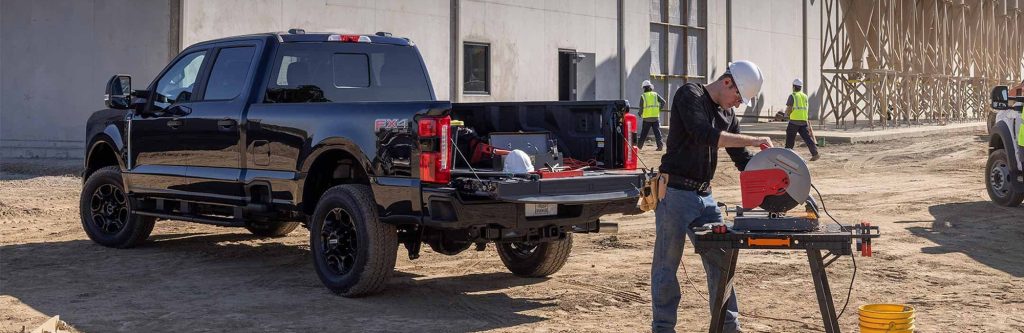
Key Considerations When Choosing a Construction Truck
When you’re considering the best tucks for construction, it’s important to assess your needs and research your options carefully, whether you’re buying new or used. Don’t forget to factor in the cost of insurance, as construction vehicles often come with higher premiums, which can impact your budget. To make the purchase even more manageable, explore various financing options, including loans or leases to find the best deal that suits your business’ needs and keeps your cash flow on track. We’ll inform you of more crucial key factors that’ll influence your truck choice to ensure you’re getting the perfect model for all of your job demands.
Budget: Set a budget for the best truck for your construction needs and keep in mind maintenance, fuel, and any additional features.
Project Type: Consider the types of jobs you embark on. A dump truck is ideal for hauling debris, while a flatbed or landscape truck works well for carrying tools and smaller equipment.
Crew & Storage: If you need to transport a team and their gear, choose a truck with an extended cab or a larger bed to accommodate crew members and their equipment.
Mileage & History: If buying used, prioritize trucks with low mileage and good maintenance records. Make sure to explore our certified Ford Blue Advantage options for the best truck for construction.
Towing & Payload: Trucks with high towing and hauling capacities, such as the Ford Super Duty and Ford Medium Duty models, can handle large equipment and materials, making them a solid choice for most construction sites with commercial industrial-level tools and materials.
Terrain: For construction in rough or inclement weather conditions, four-wheel drive will offer the best traction. Our Tire Finder tool will also help equip you with the tires you need.
Top Ford Trucks for Construction
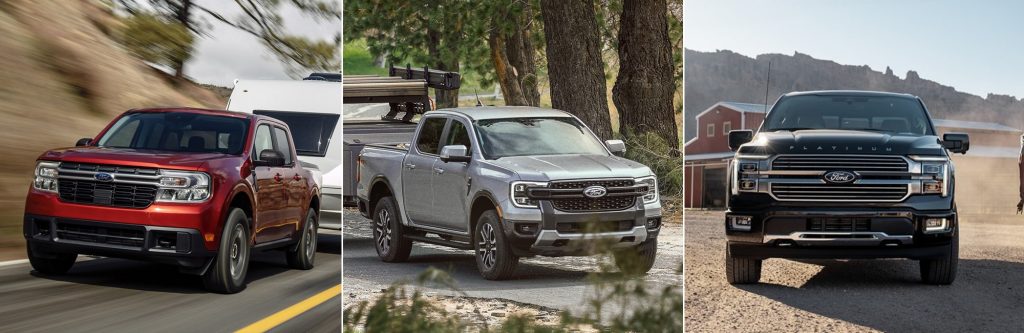
Ford offers a wide range of models designed to excel in various aspects of construction work, ensuring that no matter your needs, there’s a perfect truck for the job. Explore the lineup of the best trucks for construction to find the perfect fit and boost job productivity that keep your projects moving forward.
Ford Maverick: This is a compact, light-duty option that’s the best work truck for contractors who need versatility and fuel efficiency. The hybrid model also allows you to cover distance more efficiently if traveling becomes a necessity between job sites. It’s an excellent choice for jobs that don’t require the heavy-duty capabilities of larger trucks.
Ford Ranger: With a midsize design, the Ford Ranger combines strong towing capacity and off-road capability, making it ideal for hauling materials and navigating rugged job sites.
Ford F-150: Known for its reliability, versatility, and safety, the Ford F-150 offers excellent towing power and multiple configurations according to your needs.
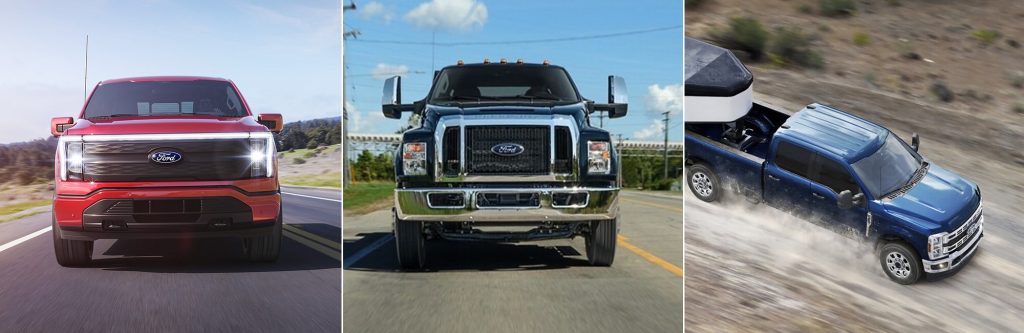
Ford F-150 Lightning: For those looking to reduce their environmental footprint, the Ford F-150 Lightning offers all the power of a full-size construction work truck, with the added bonus of an all-electric powertrain.
Ford Medium Duty: The Ford F-650 and Ford F-750 are the highlight models for this series. With a GVWR of up to 37,000 lbs. and the ability to be fitted for a variety of needs, Ford Medium Duty trucks are built for tougher jobs that require frequent heavy hauling and transportation of equipment.
Ford Super Duty: If you need to handle large equipment, materials, and trailers, the Ford F-250, F-350, F-450, and F-550 models are built for the job. Their powerful engines and robust towing capabilities up to a stellar 40,000 lbs. make them perfect for the most demanding construction sites.
Make the Right Choice
Whether you need a versatile truck for small jobs or a powerhouse for hauling heavy equipment, Ford’s lineup provides exceptional options that combine strength, reliability, and performance. From compact, fuel-efficient options like the Ford Maverick to powerful, full-size trucks like the Ford Super Duty, the choices of the best trucks for construction are endless. By evaluating your specific needs, such as budget, hauling capacity, terrain, and available storage, you can make an informed decision that’ll keep your business running smoothly. Visit Crossroads Ford of Kernersville to explore our selection of Ford trucks that are ready to take on your toughest construction projects!

Fleet Vehicles For Business Success
When your business relies on transporting goods, equipment, or fulfilling on-site needs, selecting the right vehicle becomes a crucial decision that can affect your day-to-day operations. It’s not just about finding something that gets the job done, it has to be reliable, spacious, fuel-efficient, and tailored to meet the specific needs of your business. That’s where Ford excels, offering some of the best cargo vans on the market today. At Crossroads Ford of Kernersville, we’ve put together a detailed guide to help you choose the best cargo van to boost your small business. Whether you’re looking for size, dependability, or value, we’ll walk you through the top options available based on key features like cargo capacity, commercial specs, and overall performance. Once you’ve narrowed down your choices, come visit us at our dealership in Kernersville, NC, and take a test drive to see which is the best cargo van for your small business needs!

Why Your Business Needs a Cargo Van
Cargo vans come in different sizes and configurations to cater to the needs of various industries. When choosing the best cargo van for your small business, it’s important to assess factors like dependability, cargo capacity, ease of access, and fuel efficiency. Cargo vans generally fall into two categories: small and full-sized. Here’s what each type offers.
- Small Cargo Vans: These are ideal for businesses that need to make frequent stops in urban areas or handle lighter loads. They’re easy to drive, fuel-efficient, and perfect for navigating crowded city streets.
- Full-Size Cargo Vans: These vans are better suited for businesses with heavier transport requirements or larger loads. They provide generous cargo space, making them ideal for companies that need to move bulkier equipment or materials.
Understanding which type suits your needs will help you make a more informed decision and optimize your budget when selecting the best cargo vans for small businesses.

Best Cargo Vans for Deliveries: Meet Your Deadlines
For businesses focused on deliveries and daily transportation, you’ll need a cargo van that’s capable of maneuvering through urban areas, carrying substantial loads, and maintaining good fuel efficiency. Here are the best cargo vans for small business delivery needs.
Ford Transit: For those who need to carry heavier loads, the Ford Transit is a top contender. With up to 536.4 cu.ft. of cargo space, three different roof height options, and a payload capacity of up to 5,110 lbs., it’s built for high-demand delivery services
Ford E-Transit: If reducing your carbon footprint is a priority, the all-electric Ford E-Transit is a great choice. With the same 536.4 cu.ft. of cargo space, it boasts an impressive range of up to 159 miles on a single charge, allowing for worry-free deliveries without the need for frequent recharging.
No matter what you’re delivering, the Ford Transit and Ford E-Transit are proven contenders that ensure your drive and deliveries go smoothly.

Best Work Vans for Contractors: Tough & Reliable
For businesses that require durable, heavy-duty vehicles, Ford’s cargo vans are some of the best options for contractors. The Ford Transit and Ford E-Transit provide the power and reliability needed to transport tools and materials to and from job sites.
Ford Transit: With engine options like the 3.5L V6 and the more powerful 3.5L EcoBoost® V6, delivering 310 horsepower and 400 lb.-ft. of torque, the Ford Transit is ready to take the prize as the best work van for construction.
Ford E-Transit: For eco-conscious contractors, the Ford E-Transit combines sustainability with performance, offering 266 horsepower and 317 lb.-ft. of torque from its 89kWh High-Voltage Battery. It can carry up to 3,249 lbs. of payload, so you won’t have to compromise on power to go green.
Having either the Ford Transit or Ford E-Transit won’t disappoint when it comes to the demands that your job requires. These are the best cargo vans for small businesses on the rugged side of the workforce, and they’re here to streamline your experience.
Enhance Your Business Operations
Choosing the best cargo van for your small business can make a world of difference in how efficiently you run your daily operations. Whether you’re after the impressive strength and reliability of the Ford Transit, perfect for tackling heavy loads and tough jobs, or the sustainable, eco-friendly benefits of the all-electric Ford E-Transit, both options are built to meet the specific demands of your business. At Crossroads Ford of Kernersville, we understand that every business is unique, which is why we offer a range of cargo vans to help you work smarter, not harder. Stop by our Ford dealership in Kernersville, NC, where our team will help you find the best cargo van to elevate your small business performance!

Ford Landscaping Trucks: Does Your Business Need One?
In the landscaping or lawn care business, the right truck can be a game-changer. From providing essential services to ensuring everything you need is on hand, having a reliable and versatile truck is key to your success. At Crossroads Ford of Kernersville, we understand that landscaping professionals require vehicles that are tough, dependable, and adaptable to handle all types of outdoor work. Whether you need to haul heavy equipment or tackle rough terrain, having the best truck for landscaping is vital for getting the job done efficiently. Whether you’re after a standard landscaping truck or a specialized option like a dump truck, Ford offers a diverse selection to meet your needs. Visit our Ford dealership in Kernersville, NC, and let us help you find the best truck for your landscaping business today!

Benefits of Using a Truck for Your Landscaping Business
The best truck for landscaping can significantly improve your business by enhancing productivity and streamlining operations. With the right truck, you can easily transport crew members, equipment, and materials to job sites, saving valuable time on logistics and maximizing your time on actual work. The best trucks for landscaping come equipped with features that help you stay organized, from ample storage to customizable bed options, ensuring tools and materials are secure during transit. This organization leads to faster job completion and higher quality service, giving you a competitive advantage. Plus, a landscaping truck can double as a mobile advertisement for your business—brand your truck with your logo and contact information to turn it into a billboard that promotes your services wherever you go. Whether you’re growing your fleet or just starting out, investing in the best truck for landscaping is a smart choice that enhances both your operations and marketing efforts.
What to Look for in Landscaping & Lawn Care Trucks
When selecting the right truck for your landscaping or lawn care business, it’s important to focus on key features that align with your specific needs. For those considering used trucks, choosing one with low mileage can offer reliability at a lower cost. Here’s what to keep in mind:
Towing and Hauling Capacity: Landscaping often involves transporting heavy materials like soil, mulch, and large equipment. Choose a truck with strong towing and payload capabilities to handle these loads efficiently and safely.
Durability and Reliability: Your truck needs to endure constant use in tough environments. Look for models known for their durability and low maintenance costs to keep your business running smoothly.
Versatility: Whether you need a flatbed, utility bed, or dump bed conversion, having a truck that adapts to various tasks will increase its functionality and utility for your business.
Fuel Efficiency: With constant driving between job sites, a fuel-efficient truck can help reduce operational costs and save you money over time.
Storage and Organization: Efficient storage is crucial for keeping tools and equipment safe and organized. Look for trucks with built-in compartments, racks, and customizable bed options. Accessories like tie-downs can help secure materials and reduce the risk of damage during transport.
By focusing on these key factors, you can select the best truck for your landscaping or lawn care business, ensuring it meets your operational demands while helping you save on costs and increase efficiency.
Choosing the Best Ford Truck for Your Lawn Care Business
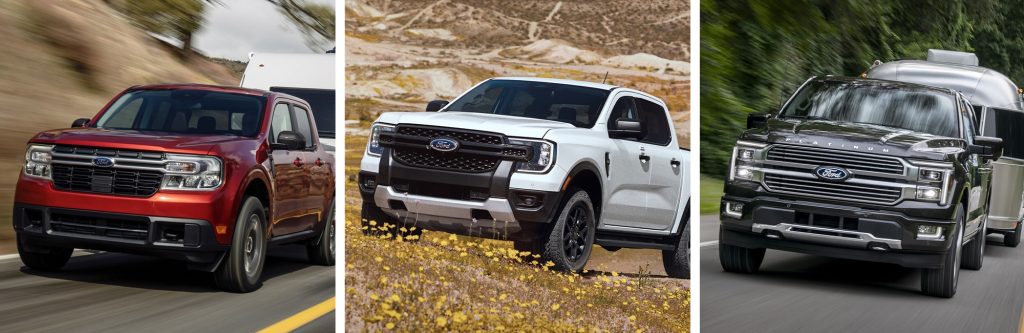
Let’s take a look at the powerful lineup of the best Ford trucks for landscaping.
Ford Maverick: If you want a versatile and reliable light-duty truck that’s ideal for smaller landscaping or lawn care businesses, the Ford Maverick is for you. Although it’s a compact truck, it boasts incredible capabilities from power to towing. When you need to haul equipment and tools like small trailers, lawnmowers, and weed whackers, the Ford Maverick doesn’t disappoint with towing up to 4,000 lbs. and a payload capacity of up to 1,500 lbs., making it one of the best lawn care trucks.
Ford Ranger: Looking at the Ford Ranger, you’ll be impressed at getting more power and capacity out of it. The engine is a standard 2.3L EcoBoost® engine, which delivers 270 horsepower and 310 lb.-ft. of torque for helping you power through your drive. When properly equipped, you’ll be able to tow up to 7,500 lbs., while also having 43.5 cu.ft. of maximum cargo box volume for storing the necessities.
Ford F-150: America’s Favorite Truck was bound to make the list of some of the best trucks for landscaping. This versatile, light-duty full-size pickup truck was made to do everything you set out to do. With numerous engine options to choose from, the Ford F-150 will exceed your expectations as one of the best Ford landscaping trucks. This is due to its maximum towing capacity of up to 13,500 lbs. And a maximum payload capacity of up to 2,440 lbs.
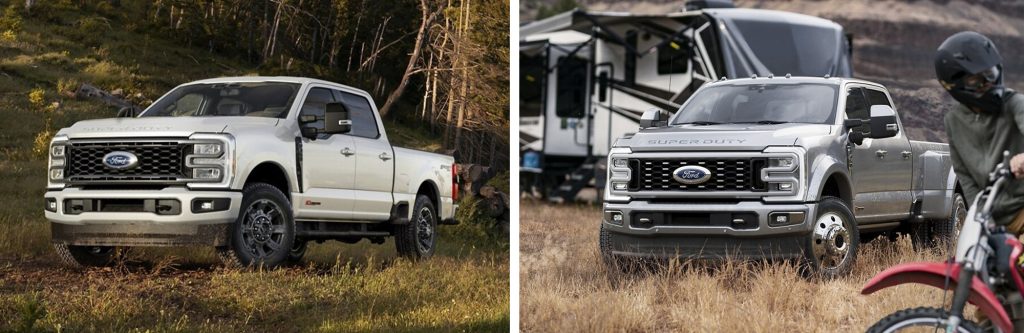
Ford Medium Duty Trucks: Explore the capabilities of the Ford F-650 or the F-750. These medium-duty trucks were designed for some of the most demanding jobs, including landscaping. With the capabilities present in the Live-Drive Power Take-Off Provision with Mobile Mode, Ford Medium Duty trucks can power the equipment needed for landscaping, optimizing productivity. Additionally, since these trucks have a chassis cab configuration and a GVWR of up to 37,000 lbs., you can load what you need. This also makes the Ford Medium Dutys the best dump trucks for landscaping.
Ford Super Duty Trucks: For all of your heavy-duty needs, selecting a Ford F-250, Ford F-350, Ford F-450, or a Ford F-550 are among the best trucks for landscaping. Thanks to their powerful selection of engines with up to 1,200 lb.-ft. of torque, you’ll also be able to utilize a maximum towing capabilities of up to 40,000 lbs. Ford Super Duty models don’t compromise on power, and when you need the best trucks for landscaping, you have numerous options available.
Select Your Truck
Choosing the right truck for your landscaping business is crucial for its success. Whether you need a reliable workhorse for daily tasks, a versatile truck for hauling equipment, or a durable dump truck for heavy-duty jobs, Crossroads Ford of Kernersville has the best trucks for landscaping. We’re here to help you find the one that meets your specific needs, budget, and workload. Visit our dealership to check out our wide range of trucks tailored for landscaping professionals today!
What Ford Vehicles Qualify For Section 179?

Maximize Savings With Ford Section 179: A Guide For Business Owners
When you’re in charge of getting everything together for your fleet of commercial vehicles, you’ll want to streamline the process of managing them. Thanks to the tax benefits provided by Ford Section 179, you can optimize savings and other benefits such as allowing your business to deduct a significant portion, or even the entire cost, of qualifying equipment purchases, including Ford vehicles. By reducing your taxable income, you can maximize cash flow and reinvest in your business growth. To ensure your Ford vehicle qualifies for Section 179, it must meet specific criteria, such as being used for business purposes at least 50% of the time. Get in touch with the helpful staff at Crossroads Ford of Kernersville to get started on Section 179 savings today!

Qualifying Ford Vehicles & Eligibility
The Section 179 tax deduction allows business owners to write off up to 100% of qualifying equipment purchases, including when they buy qualifying Ford vehicles, on their current IRS tax return. Let’s take a look at the Ford Section 179 in depth. This’ll include the available models and specifications needed for your business to qualify. To qualify for Section 179, the vehicle must be used for business at least 50% of the time and meet specific requirements, such as a gross vehicle weight rating of over 6,000 lbs. Ford trucks, vans, and SUVs that meet these requirements qualify for Section 179.
Eligible vehicles include any of the trucks in the Ford F-Series, like the Ford F-150, Ford Super Duty, and Ford F-150 Lightning, any of the Ford Transit Vans, the Ford Expedition, and the Ford Explorer. Furthermore, the qualifying vehicles must be purchased and placed into service before December 31st of the tax year. Vehicles used for personal purposes do not qualify for Ford Section 179, and the deduction is only available for business use.
The tax benefits enable businesses to deduct the full purchase price of qualifying equipment, reducing their gross taxable income. It’s essential to consult a tax advisor to ensure you understand the current IRS tax code and how Section 179 applies to your business. The deduction can be claimed on the business’s tax return, and it’s essential to keep accurate records of the purchase and business use of the vehicle.
What Qualifies as a Commercial Vehicle?
To secure a Ford Section 179 deduction for your business, the vehicles you choose must meet your business goals. For a Ford F-150 to qualify for Section 179, you’ll often see businesses using them to carry out various work operations like towing, carrying tools, and advertising the business. For a Ford F-250 and Ford F-350 to qualify for Section 179, these trucks carry out more heavy-duty tasks in regards to towing more load, having a Chassis Cab configuration for specialized tasks, and hauling heavy-duty equipment. Moving onto the Ford Transit vans, these are efficient commercial vehicles designed to carry all of your tools, as well as serving your towing needs.
Do Ford Expeditions and Ford Explorers qualify for Section 179 savings? Absolutely. While they may not symbolize conventional blue-collared jobs with rugged features designed to carry out the toughest tasks, these SUVs possess their own capabilities for any business. From ridesharing to towing and storage capacities, there’s no shortage of the utility a Ford Expedition and Ford Explorer are capable of. The same goes for the all-electric Ford F-150 Lightning. Its rugged nature and utility on the worksite include towing, providing electricity and outlets when needed, and even serving as backup power in case of outages.

Benefits & Limitations
The Ford Section 179 tax deduction allows business owners to write off up to $1,220,000 of qualifying vehicle purchases in the first year. After the initial deduction, qualifying Ford trucks, vans, and SUVs can receive a certain percentage of depreciation on the remaining balance, further enhancing the financial benefits. The deduction can be used to reduce taxable income, resulting in significant tax savings. However, there are limitations to the deduction, such as the purchase limit of $3,050,000. You can also take advantage of up to 60% in bonus depreciation for both new and pre-owned commercial vehicles.
Start Claiming Today
Claiming the Section 179 deduction can take just a few seconds, and it can result in significant tax savings for your business. Secure verifying processes ensure that your interactions with our dealership are safe and protected. Remember that in order to claim the Section 179 deduction, business owners must purchase and place the qualifying vehicle into service before December 31st of the tax year. Ensuring a positive website experience is crucial when navigating our online resources. You should consult with a tax advisor to help ensure that the deduction is claimed correctly and that all necessary documentation is in place. Now that you’re better equipped with an understanding of Ford Section 179, get in touch with our staff at Crossroads Ford of Kernersville to help you along the way!
Ford Expedition Cost of Ownership

The Pricing & Ownership Expenses Of A Ford Expedition
The Ford Expedition is a full-size SUV that offers a spacious and comfortable riding experience equipped with numerous features that are perfect for the whole family. Before purchasing a new Ford Expedition, it’s important to understand the total cost of ownership. This includes the purchase price, insurance, depreciation, and maintenance costs. Crossroads Ford of Kernersville provides a comprehensive guide to help you make an informed decision. Let’s get started!

Initial Purchase Price & Incentives
The Ford Expedition has a starting price range of around $64,000-79,000. The final cost depends on the trim level, options, and model year. Dealerships often offer incentives and discounts to lower the purchase price. When negotiating, consider the invoice price, current market value, and available rebates. Additionally, the initial purchase price significantly informs the Ford Expedition’s resale value over time, or how much value it retains after ownership for a number of years compared to when it was brand new.
Numerous Features to Enjoy: The Specs
Whether you choose a 210-in. long Ford Expedition or a 221.9-in. long Ford Expedition MAX, you can customize it to your liking. From performance and appearance upgrades such as the Stealth Edition and Texas Edition Packages to the available 3.5L EcoBoost® High-Output engine that generates up to 440 horsepower and 510 lb.-ft. of torque, your choices are numerous. For those seeking extra towing capabilities, when you equip the Ford Expedition with the Heavy-Duty Trailer Tow Package, you can tow up to 9,300 lbs. Stepping inside the spacious Ford Expedition interior, ample seating for up to eight passengers make it perfect for family adventures. Elevate your driving experience with premium materials available on select models, adorning the interior surfaces and seating. The Ford Expedition boasts a spacious cargo area, offering up to 104.6 cu.ft. of storage, and up to 121.5 cu.ft. on the Ford Expedition MAX. Stay connected and entertained with a 12-in. LCD touchscreen infotainment system featuring SYNC® 4 or available SYNC® 4A, offering seamless integration with Apple CarPlay® and Android Auto™. Drive with confidence thanks to standard driver-assistance features like Lane-Keeping System and Hill Descent Control™, included in the available Ford Co-Pilot360® suite.

Choosing the Right Ford Expedition for Your Needs
Selecting the perfect Ford Expedition for your needs involves several key considerations. Here are some tips to help you make an informed decision.
Determine Your Budget: Start by considering your purchase price, monthly payment, and interest rates. Knowing these will give you insight into how much you can afford to spend on a Ford Expedition.
Assess Your Needs: Think about how you plan to use your Ford Expedition. If it’s primarily for daily commuting, a base model might suffice. However, if you need a vehicle with more pep or style, upgrading to available features or higher models might be what you need.
Research Different Model Years: Compare depreciation rates, maintenance costs, and if the Ford Expedition holds its value for different model years. This will help you find the best value for your money.
Test-Drive Different Trims: Take various trim levels for a test drive to see which one best suits your needs and preferences.
Consider Ford Blue Advantage Options: If you’re looking for a used Ford Expedition, consider Ford Blue Advantage certified pre-owned options. These vehicles have been thoroughly inspected across numerous categories by professionals, offering added peace of mind.
By taking these factors into account, you can choose the right Ford Expedition that fits your needs and budget, ensuring you get the best value for your money.

Five Years of Ownership: The Costs Involved
The Ford Expedition’s estimated five-year cost is between $94,000 and $96,000. This includes depreciation, taxes, fees, financing, and insurance. Comparing the Ford Expedition’s costs with other cars over five years, as well as with other SUVs and full-size SUVs, can provide a broader market context. Using an online calculator and comparing costs with similar vehicles can help you make a more informed decision.
The Cost of Insurance & Maintenance
Insurance for a Ford Expedition costs around $5,000-14,000 over five years. This varies based on trim level, options, and driving history. Shop around for the best rates and consider bundling policies. If you’d like to stick to branded coverage, Ford offers Ford Insure for all your needs.
In five years of ownership, maintenance costs for the Ford Expedition can range from $3,000-5,000, but repair costs can fluctuate depending on the vehicle’s age, mileage, and specific issues. If you consider extended warranties, they’ll help protect you from unexpected repairs. Additionally, researching the reliability and durability of the Ford Expedition can help you anticipate potential long-term costs.
Extra Protection: Warranty & Extended Warranty
Ford offers a 3-year/36,000-mile basic warranty and a 5-year/60,000-mile powertrain warranty. This coverage can reduce the overall cost of ownership. If you’re concerned about future maintenance costs, consider Ford Protect, an extended warranty program with packages that are tailored specifically to your needs with plans that cover theft, dents, tires, vehicle components, and so much more.
Own Your Ford Expedition Today
The Ford Expedition is the preferred option for those wanting a blend of comfort, style, and performance. When you’re looking to buy one of these spacious full-size SUVs, consider maintenance costs, insurance expenses, and overall value to ensure you’re making the best choice for you. By researching these, as well as the Ford Expedition’s features, trim levels, and depreciation rate, you’re guaranteed to find your perfect match. That being said, the overall cost of owning this ride over five years is around $94,000-96,000. If you’re prepared for the cost of owning a Ford Expedition, visit Crossroads Ford of Kernersville for a test drive today!
Ford Ranger Cost of Ownership

Ford Ranger Cost: A Comprehensive Guide to Ownership
Thinking about making the Ford Ranger your daily driver that’s also your rugged work companion? Before you make your choice, it’s essential to understand the true cost of ownership. While this midsize truck from Ford’s exceptional lineup of Built Ford Tough® models is renowned for its versatility, power, and features, the total financial commitment extends beyond the initial purchase price. At Crossroads Ford of Kernersville, we’ll review the intricacies of Ford Ranger ownership costs, from financing options to ongoing maintenance costs, in order to provide you with the information you need to make an informed decision. Visit us in Kernersville, NC, to get started!

Initial Purchase Price & Incentives
The Ford Ranger has a starting price range of around $44,000-57,000. The final cost depends on the trim level, options, and model year. Dealerships often offer incentives and discounts to lower the purchase price. When negotiating, consider the invoice price, current market value, and available rebates. Additionally, the initial purchase price can significantly impact the Ford Ranger’s resale value over time, affecting how much it retains after ownership for a number of years.
Numerous Features to Enjoy: The Specs
The Ford Ranger is a versatile truck that blends rugged capability with modern comfort. Its bold exterior features LED lighting, muscular styling, and customizable appearance packages. Under the hood, the standard 2.3L EcoBoost® engine delivers impressive power and towing capacity when paired with the available Trailer Tow Package to achieve a maximum tow of up to 7,500 lbs. You can upgrade your performance to the next level with the optional 2.7L EcoBoost® V6 engine as well. The Ford Ranger’s off-road prowess is further enhanced by the available FX4™ Off-Road Package, which includes features like Trail Control™ and an electronic-locking rear differential.
When you step inside, the Ford Ranger offers a comfortable and tech-savvy interior designed to accommodate up to five passengers. Safety takes center stage with Ford Co-Pilot360® as standard, featuring a suite of advanced driver-assistance systems, including Adaptive Cruise Control, Blind Spot Information System with Trailer Coverage, Pre-Collision Assist, and Lane-Keeping System. The 8-in. digital instrument cluster keeps you informed about vital driving data, while the 10-in. center stack display powered by SYNC® 4A technology provides seamless connectivity. Stay connected on the go with Apple CarPlay®, Android Auto™, and FordPass® Connect. A convenient wireless charging pad ensures your devices stay powered, and the premium B&O® Sound System with ten speakers delivers an immersive audio experience.
The available features, in addition to the standard package, show that the cost of a Ford Ranger can fluctuate depending on the options you choose to equip your ride with. It all comes down to what you want.

Choosing the Right Ford Ranger for Your Needs
Selecting the perfect Ford Ranger for your needs involves several key considerations. Here are some tips to help you make an informed decision while also being mindful of your budget.
Determine Your Budget: Start by considering the purchase price and interest rates. Knowing these will give you insight into how much you’ll spend towards the Ford Ranger’s monthly payments.
Assess Your Needs: Think about how you plan to use your Ford Ranger. If it’s primarily for daily commuting and some light work, a base model might suffice. However, if you need a vehicle with more power or technology to assist you, upgrading to available features or higher models might be what you need.
Research Different Model Years: Compare depreciation rates, maintenance costs, and Ford Ranger resale values for different model years. This will help you find the best value for your money.
Test-Drive Different Trims: Take various trim levels for a test drive to see which one best suits your needs and preferences.
Consider Ford Blue Advantage Options: If you’re looking for a used Ford Ranger, consider Ford Blue Advantage certified pre-owned options. These vehicles have been thoroughly inspected across numerous categories by professionals, offering added peace of mind.

Five Years of Ownership: The Costs Involved
The Ford Ranger’s estimated five-year cost is between $51,000 and $58,000. This includes the Ford Ranger’s depreciation, taxes, fees, financing, and insurance. Comparing its costs with other trucks over five years can provide a broader market context, especially if you’re wondering if the Ford Ranger will hold its value.
The Cost of Insurance & Maintenance
Insurance for a Ford Ranger costs around $5,000-16,000 for five years. This varies based on trim level, options, and driving history. Shop around for the best rates and consider bundling policies. If you’d like to stick to branded coverage, Ford offers Ford Insure for all your needs.
In five years of ownership, maintenance costs for the Ford Ranger can range from $3,000-5,000, but repair costs can fluctuate depending on the vehicle’s age, mileage, and specific issues. If you consider extended warranties, they’ll help protect you from unexpected repairs. Additionally, researching the reliability and durability of the Ford Ranger can help you anticipate potential long-term costs.
Extra Protection: Warranty & Extended Warranty
Ford offers a 3-year/36,000-mile basic warranty and a 5-year/60,000-mile powertrain warranty. This coverage can reduce the overall cost of ownership. If you’re concerned about future maintenance costs, consider Ford Protect, an extended warranty program with packages that are tailored specifically to your needs with plans that cover theft, dents, tires, vehicle components, and so much more.
Own Your Ford Ranger Today
The Ford Ranger is the preferred option for those wanting a blend of comfort, technology, and performance. When you’re looking to buy one of these efficient midsize trucks, consider maintenance costs, insurance expenses, and overall value to ensure you’re making the best choice for you. By researching these, as well as the Ford Ranger’s features, trim levels, and depreciation rate, you’re guaranteed to find your perfect match. That being said, the overall cost of owning this ride after five years is around $51,000-58,000. If you’re prepared for the cost of owning a Ford Ranger, visit Crossroads Ford of Kernersville for a test drive today!
zConnect with us

